
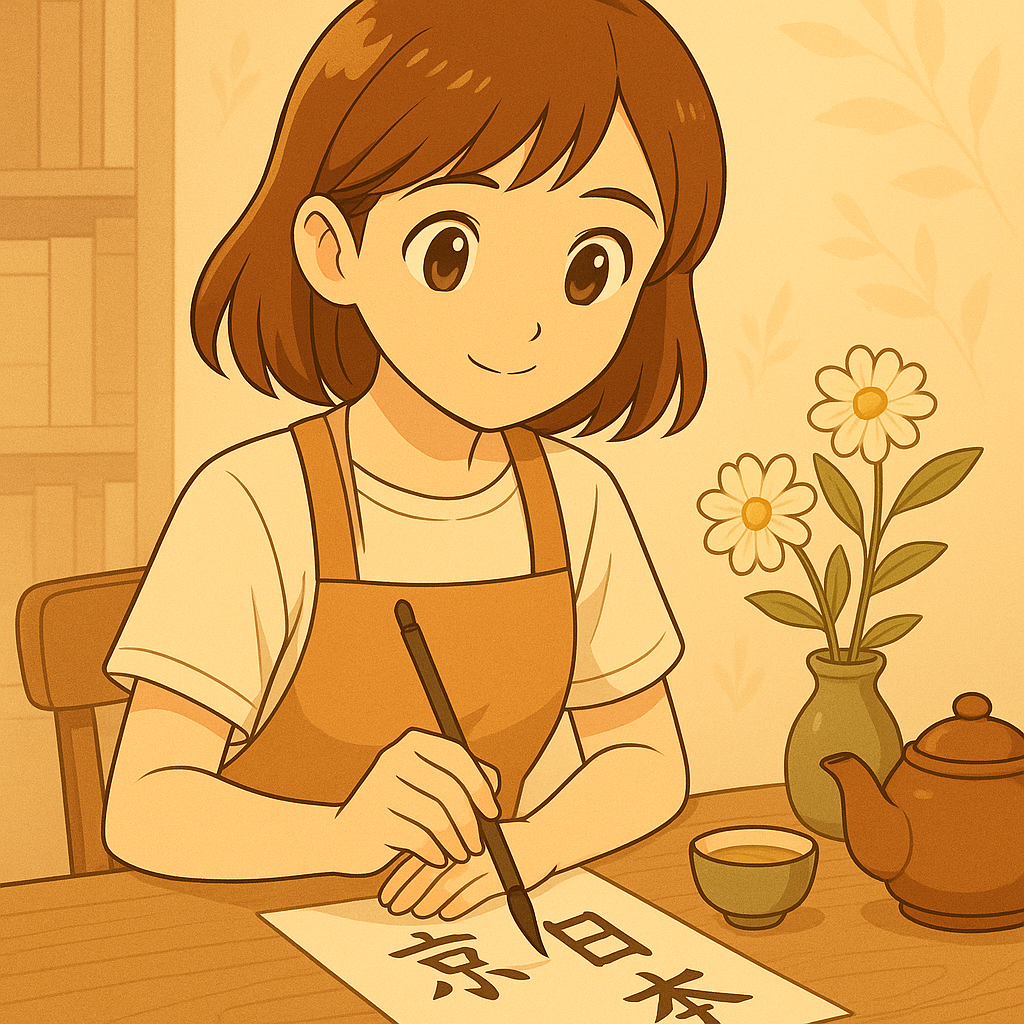
Looking into the Japanese Heart Through Its Words

Learning a language is about more than vocabulary.
What touches us most is not the words themselves, but the world of values hidden within them.
Japanese is that kind of language—
gentle, subtle, and quietly expressive.
I often tell my students:
"Learning Japanese is not only about learning words.
It is about learning a gentle way of seeing the world."
Take the everyday expression「いただきます」for example.
On the surface, it is simply said before a meal.
Yet it is also an expression of gratitude—
gratitude for life, for nature,
for those who prepared the food, for the land, and for every living thing.
A single simple phrase
contains deep respect for the world around us.
Another example is「お疲れ様です」.」,
It means far more than simply saying,
"You worked hard."
It is a gentle acknowledgement of another person's efforts,
a quiet expression of appreciation and mutual respect.
That spirit of kindness
is one of the foundations of Japanese culture.
In Japan,
language is not merely a tool for communication.
It is also an art of understanding
the delicate distance between people.
Words spoken too directly may cause hurt.
Words spoken too strongly may sound impolite.
So people often choose gentle expressions,
allowing one another space to breathe.
I often feel that learning Japanese
is much like arranging flowers.
You learn proportion.
You learn the beauty of empty space.
And perhaps most importantly,
you learn when to let go—
allowing words,
like flowers,
to bloom quietly in silence.
Language is a mirror of culture.
And Japanese,
through that mirror,
reflects a way of living
filled with gentleness, sensitivity, and quiet warmth.