
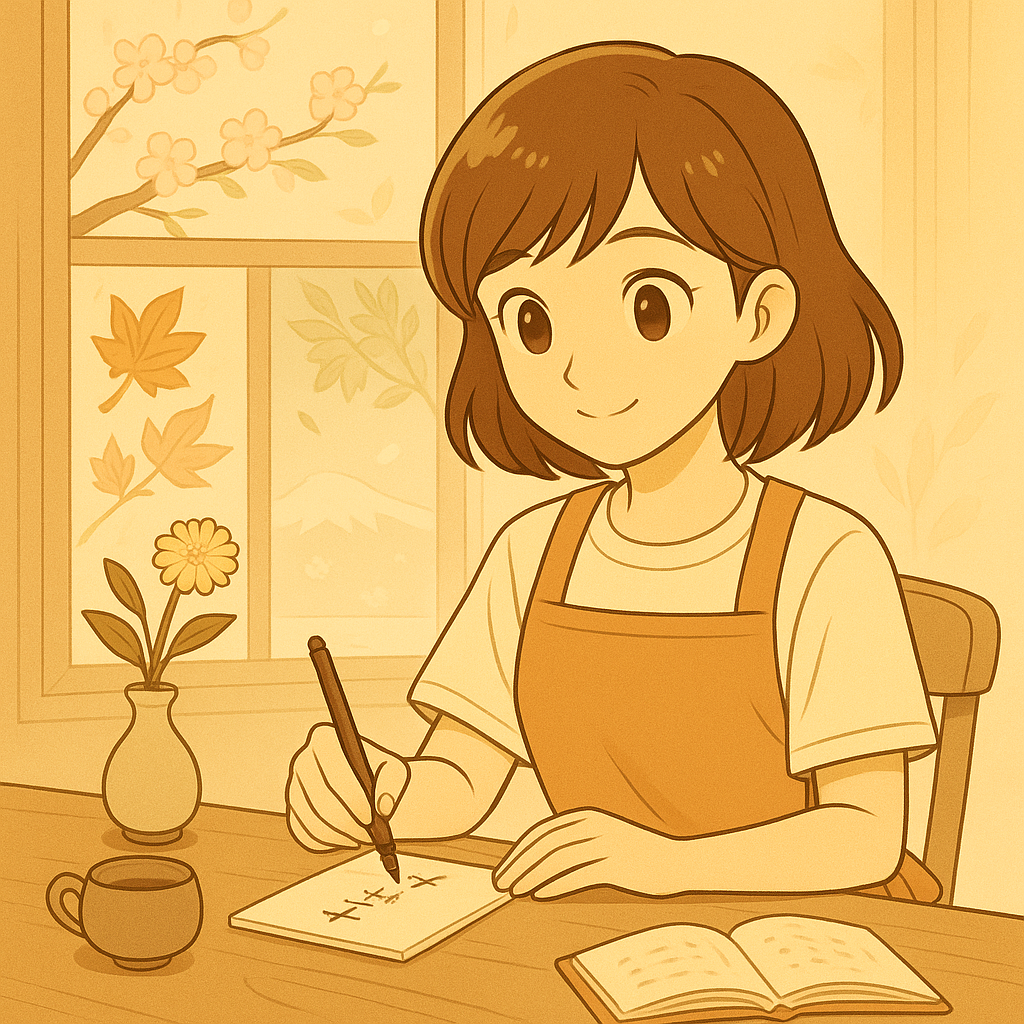
The Poetic World of Seasonal Words (Kigo)

In Japanese haiku (俳句),
there is a beautiful concept known as kigo (季語)—
seasonal words that represent a particular time of the year.
They are not merely a poetic technique.
They are a gentle way of experiencing the changing seasons through language.
Spring has cherry blossoms (桜).
Summer has fireflies (蛍).
Autumn has maple leaves (紅葉).
Winter has snow (雪).
Each word is more than a word—it is a painting, a memory, and the fragrance of a season.
I have always admired this tradition.
The Japanese preserve the passage of time through seasonal words,
while also preserving memories through emotion.
They believe that every season carries its own unique atmosphere,
and language becomes the vessel that keeps those moments alive.
In my classes, I sometimes read short haiku together with my students.
One of the most famous is Matsuo Bashō's:
An old pond— A frog jumps in; The sound of water.
With only seventeen syllables,
it quietly captures the very breath of spring. It is a beauty born from stillness.
Floral design and language share the same spirit.
One flower, one sentence—
both can become a way of expressing the seasons.
Whenever I design a floral arrangement,
I often ask myself:
"Which season does this bouquet belong to?"
Is it the gentle blush of spring,
or the warm orange glow of autumn?
Every colour and every form, like a seasonal word,
carries its own season and its own warmth.
Language teaches us to express.
Seasonal words teach us to feel.
As the seasons quietly turn,
may we each discover the poem that belongs to our own hearts,
allowing time itself
to bloom like a flower.